
Five-Step Spiral Inclusive Strategic Planning Process for Nonprofits
Inclusive Strategic Planning is a collaborative, structured process that incorporates multiple perspectives—especially those closest to the work—to help organizations move forward thoughtfully, equitably, and with clarity.
This approach to strategic planning is designed for nonprofits, foundations, and public-serving organizations that want more than a static plan. It is for organizations that want a planning process that builds trust, creates shared ownership, and leads to action.
What Is Inclusive Strategic Planning?
Inclusive Strategic Planning answers a simple but powerful question:
How will we thoughtfully and collaboratively move forward for the good of our organization, our community, and the world?
Unlike traditional strategic planning—where decisions are often made by a small group and shared later—Inclusive Strategic Planning intentionally designs participation, decision-making, and communication into every phase of the process.
This approach recognizes that:
Strategy is stronger when it reflects lived experience and frontline insight
Inclusion is a value statement, and a set of concrete design choices
The way a plan is created determines whether it will be used
Inclusive Strategic Planning is both a process and a practice. It balances structure with flexibility and ensures that clarity, equity, and accountability are built into the work from the beginning.
Why Inclusive Strategic Planning Is Needed
Many organizations arrive at strategic planning during moments of change, growth, or uncertainty. Traditional planning processes often struggle in these contexts because they:
Prioritize speed over shared understanding
Rely on templates rather than context
Separate planning from implementation
Treat inclusion as optional or symbolic
Inclusive Strategic Planning responds to these challenges by slowing the process down in the right places and creating space for reflection, alignment, and trust-building.
This approach is especially valuable when organizations are:
Navigating complexity or rapid growth
Responding to internal or external change
Seeking greater alignment between board and staff
Wanting a strategic plan that actually guides decisions
When done well, Inclusive Strategic Planning does more than produce a document. It creates clarity, builds commitment, and lays the groundwork for meaningful action.
How The Ross Collective is different than other strategic planning firms
1. Inclusion is part of the methodology, not an add-on.
Many firms treat inclusion and equity as a value that gets incorporated into a conventional planning process. For us, participation is an essential part of the intervention: we include structured conversations, multiple perspectives, Design Teams, interviews, assessments, and facilitated decision-making.
2. We focus on the people dynamics underneath the strategy.
We know that leaders can't execute a strategy they don't understand, believe in, or feel ownership of. Throughout the process, we create the conditions for people to talk about difficult issues, build trust, and move forward.
3. We connect strategic planning and board governance and work with organizations holistically
We don't treat the strategic plan as a document owned by staff and governance as a separate board problem. Instead, the processes we lead use strategy to clarify board roles, staff-board relationships, decision-making, fundraising, accountability, and governance.
4. We combine structure with warmth.
Our process deliberately combines: structure + participation + candor + care + action. Our work is highly structured and relational, with compassion and warmth alongside rigorous tools and implementation planning.
5. We work with clients to create a living strategic plan.
The Ross Collective explicitly includes implementation planning rather than treating the completed strategic plan as the finish line.
The Five-Step Spiral: The Inclusive Strategic Planning Process
Inclusive Strategic Planning follows a five-step spiral rather than a linear checklist. Each step builds on the previous one and prepares the organization for what comes next.
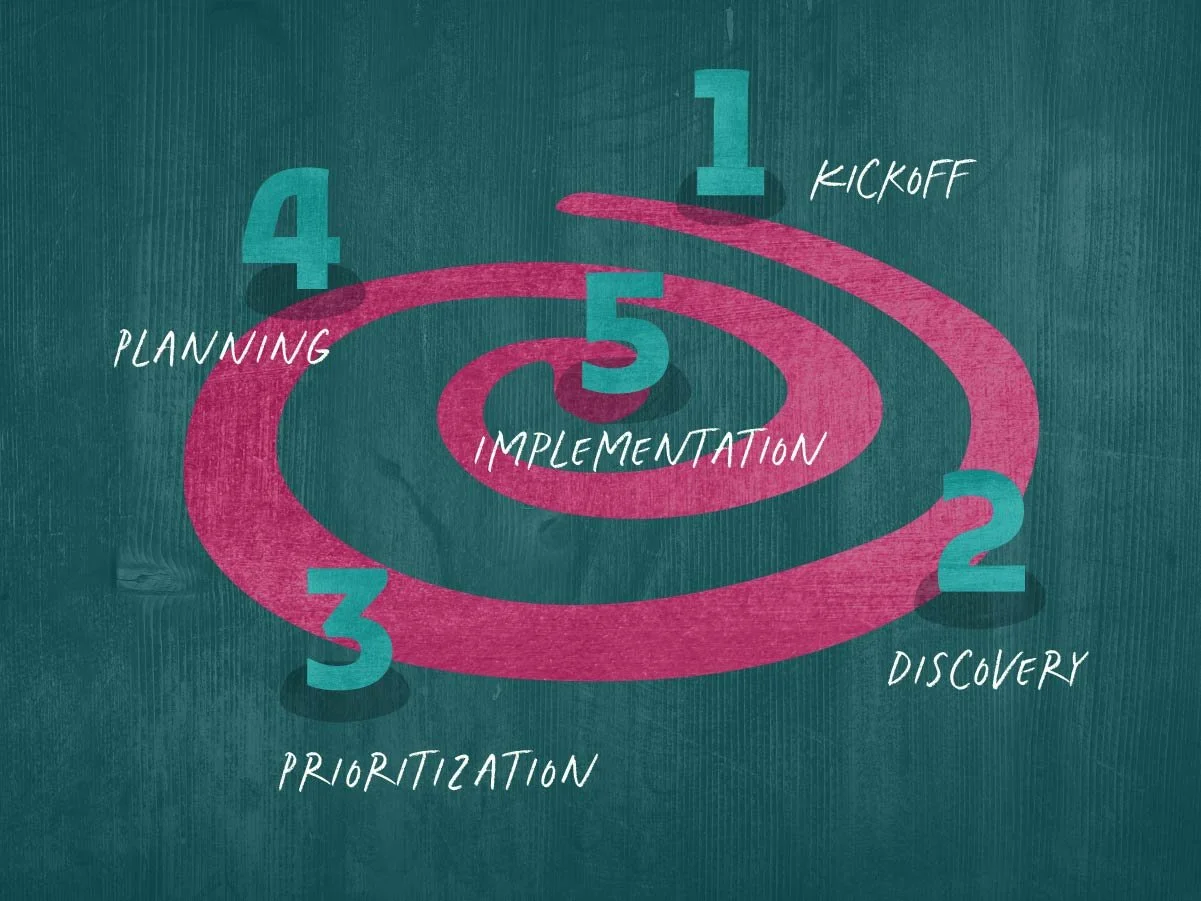
Step 1: Kickoff
The process begins by clarifying purpose and generating shared energy for the work. This step focuses on defining the "why" of planning, setting expectations, and establishing transparency from the start.
Step 2: Discovery
Discovery brings multiple perspectives into the process through interviews, focus groups, data review, and reflection. The goal is to surface insights, hard truths, and shared understanding before decisions are made.
Step 3: Prioritization
In this phase, organizations move from information to focus. Prioritization helps leaders and stakeholders identify what matters most and where the organization will concentrate its energy.
Step 4: Planning
Planning translates priorities into a practical vision, strategies, and goals. This step creates a clear roadmap that reflects both ambition and reality.
Step 5: Implementation
Implementation turns strategy into action. This step clarifies responsibilities, timelines, systems, and communication so the plan becomes a living guide rather than a static document.
The spiral reflects the reality that planning is iterative. Organizations often revisit earlier steps as new insights emerge. Dive deeper into the Five-Step Spiral of Inclusive Strategic Planning.
Circles of Participation: Whose Voice Must Be Heard?
A defining feature of Inclusive Strategic Planning is intentional decision-making design. Not everyone participates in the same way—and that is a strength.
This process uses three Circles of Participation:
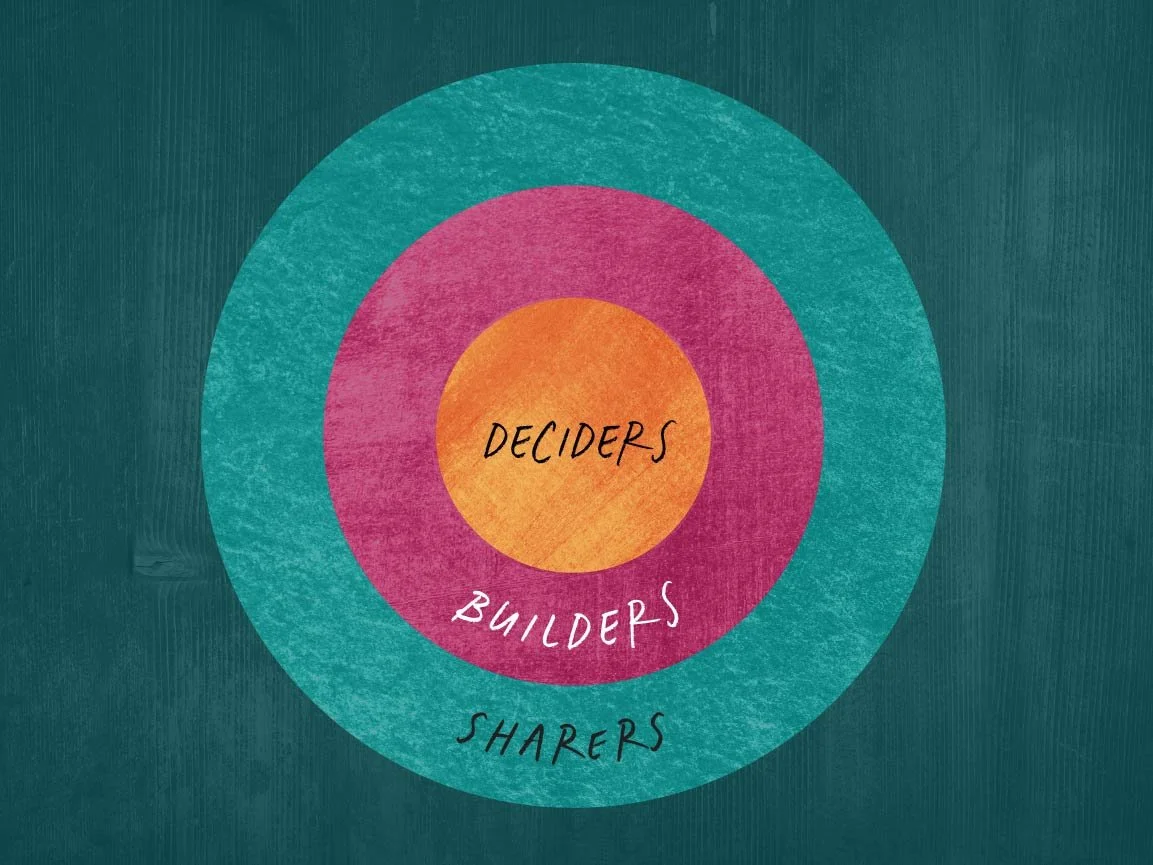
Deciders
Deciders are the individuals or groups responsible for making final decisions. They hold accountability for the outcomes of the plan.
Builders
Builders actively shape the vision, strategies, and goals. They bring operational insight and help translate ideas into workable plans.
Sharers
Sharers contribute perspective, experience, and feedback. They help ensure the plan reflects the realities of those impacted by it.
Clearly defining these roles creates transparency, sets expectations, and prevents confusion. It also ensures that inclusion is meaningful rather than performative.
Learn more how circles of participation create energy, alignment, and opportunity.
Outcomes Beyond the Plan
Inclusive Strategic Planning is designed to create outcomes that extend far beyond the final document.
Organizations that use this approach often experience:
Greater clarity and alignment across teams
Stronger trust between staff, board, and stakeholders
Increased readiness for change and implementation
Clearer priorities and decision-making frameworks
Momentum for future work and growth
Creating a strategic plan is not the end of the process—it is the beginning. When planning is done inclusively, it opens the door to sustained progress, adaptive leadership, and meaningful impact.
Work With The Ross Collective
The Ross Collective partners with nonprofits and public-serving organizations to design and facilitate Inclusive Strategic Planning processes that reflect their values and goals.
If your organization is considering strategic planning and wants a process that builds clarity, trust, and action, we invite you to learn more about our approach or get in touch.