
How nonprofit Maturity creates gifts and unexpected challenges
Between war, economic volatility, and overall destructiveness at the federal level, basic functioning is so hard right now.
For those of you who have been reading this blog for a while, we have written variations on the same question for years now: How DO we survive and—dare I say it?—thrive in these incredibly challenging times?
We’ve written on finding energy in challenging times, three ideas for collective strength—and resistance—right now, and four keys to weather current nonprofit financial challenges with resilience.
If you are paying attention, you are disgusted and enraged by events. Many days, I can’t even believe that so much of this is happening. And it’s not to be ignored. In fact, we’re the first to say: for productive meetings, name what is in the room.
One of the ways that I survive is by feeling all of the rage and heartbreak that those of us who are deeply human must feel if we are paying attention. But I don’t stop there.
In these times, hope and meaning can come from the good work we are doing. In the face of violence, we imagine and build a future in which all people thrive. The core of our work is supporting leaders to create space for conversations and build plans that prioritize investment, energy, and opportunity.
And with that, we continue our series on Nonprofit Lifecycle by talking about the Maturity stage.
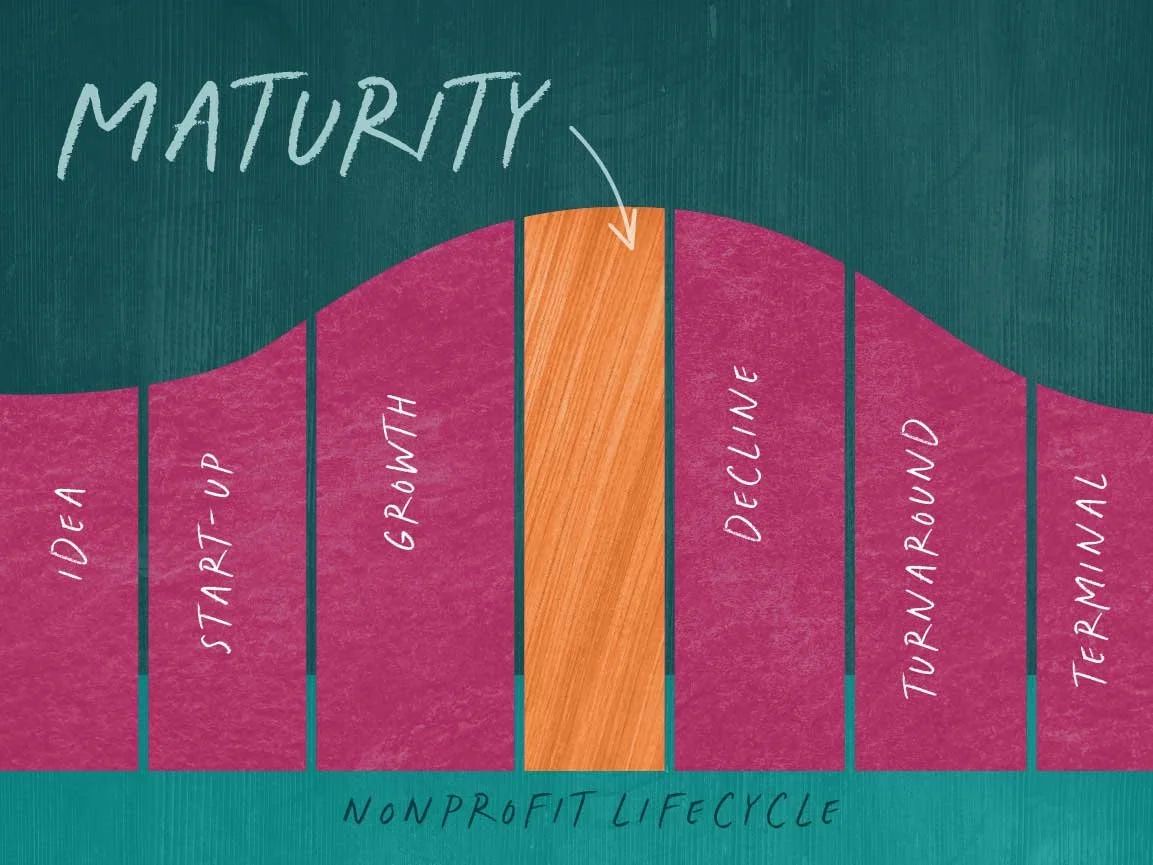
ID: Nonprofit Lifecycle with Idea, Start-up, Growth, Maturity, Decline, Turnaround, Terminal. These are each pink except Maturity is orange.
One of the key ideas about nonprofits is that they come in many shapes and sizes. So the experience of a Start-Up nonprofit is very different from an organization in Maturity.
First, what characterizes organizations in Maturity? They’re large organizations with multimillion dollar budgets. Some have only one location, others work nationally or internationally.
Mature organizations devote a lot of resources, including time, money, and attention, to finances and fundraising. They have to, in order to keep the organization functioning.
Depending on the size of the organization, there may be one strategic plan, or different plans for units and departments, all aligning under a shared mission and vision. These plans will include financial projections to continue to ensure sustainability. The Board can support staff leaders through involvement in fundraising, partnering with staff to refine the vision, and adding extra energy and ambassadors to amplify the organization’s work.
Most public universities and hospitals have reached the Maturity stage, as well as well-known nonprofits such as the Red Cross, YMCA of the USA, Goodwill Industries International, Feeding America, and many more.
The gift—and challenge—of sustainability
In the Maturity stage, core programs are recognized, established and doing well. Staff are more specialized in their roles. In terms of the board, committee work becomes more important, as does fundraising. Administrative systems become standardized and efficient. In terms of finances, there are reliable and diverse funding streams, often including planned giving and an endowment.
In other words, the organization has found a sustainable path forward. The challenge is holding on to that sustainability.
Organizations in the Maturity stage are dealing with greater complexity, and it’s easy, especially in current times of great uncertainty, to encounter financial pressure and budget tightening.
Even those well-functioning Mature organizations that have the resources needed to run programs effectively, innovate, and continue to strengthen systems might find themselves falling into comfortable patterns and forgetting to take risks, to be innovative, and to embrace change.
In the simplest terms: change or die!
That might sound harsh. But the world around each of us, and around our organizations, is continually changing. Organizations in Maturity must keep listening and learning in order to remain relevant.
For those that are unable to do this, there is the risk that another organization will come along that is more connected to the community or more nimble in meeting community needs. If that happens, Mature organizations may move into Decline, which I’ll discuss in my next post.
Have you met a Mature organization, or are you working at one currently? How would you characterize an organization at the Maturity stage, and what challenges do you feel are greatest for them?
All posts in this series:
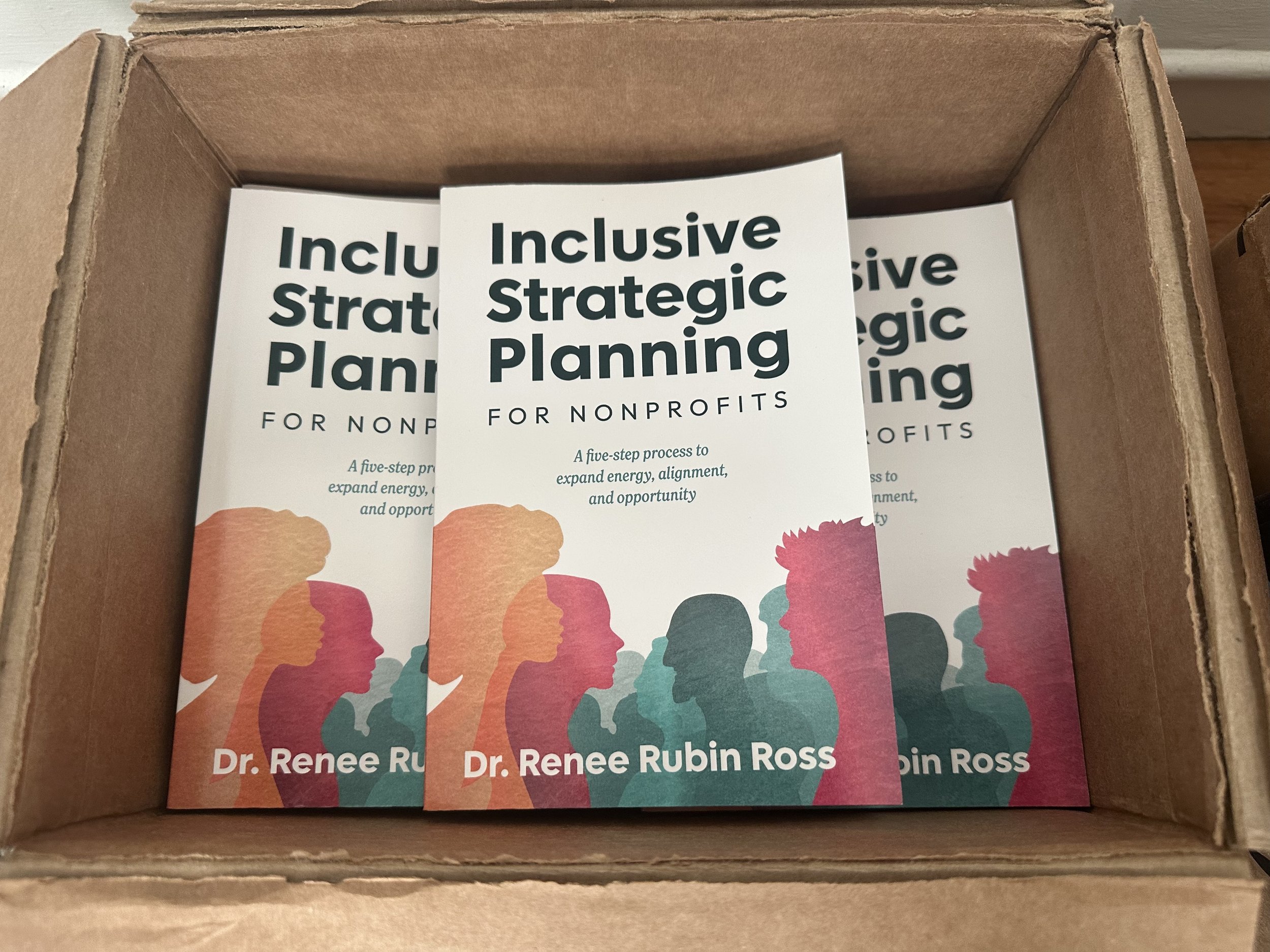
Inclusive Strategic Planning for Nonprofits Book Update
It’s so exciting to see my book travel the world! Over the past few weeks, I had the opportunity to share it in person with several local San Francisco Bay Area networking groups. I have recorded several podcasts and will be recording more in the next few months. The book is now available on Bookshop in addition to our website and Amazon.
Thank you to those of you who have submitted reviews on Amazon—it is much appreciated. I’m continuing my review drive through the month of March with the goal of getting 50 reviews. I’m currently ⅖ of the way there. (Thank you launch team!) It is so gratifying to read the positive feedback coming in.
If you would be willing to read the book and post a review, be in touch to let me know and I can send you the Review Kit.